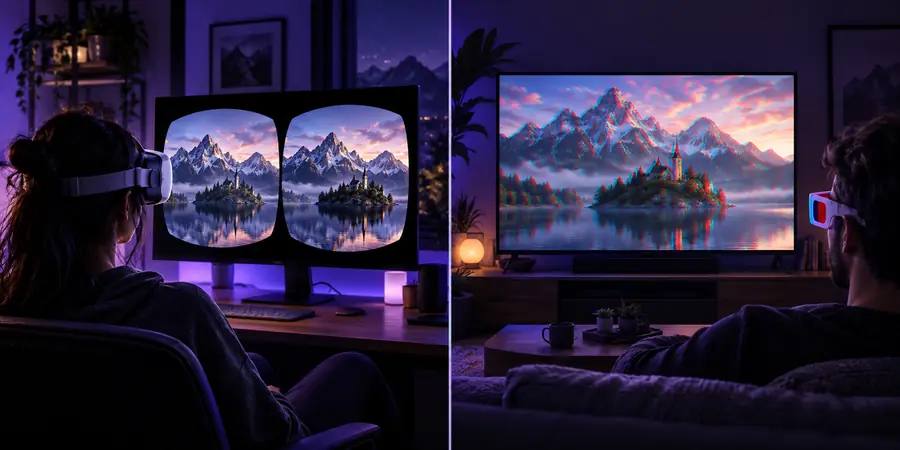
Workflow comparison

owl3d vs iw3: Which workflow fits?

The owl3d vs iw3 decision is less about a universal winner and more about how each tool handles your source material, depth expectations, processing time, and finishing workflow. Use this guide to compare the practical trade-offs before switching.

Total cost: what you actually spend

Compare the full workflow, not just the visible tool cost. Time spent preparing footage, checking depth, exporting files, and correcting weak shots can matter as much as access fees.

1

Owl3D

Recommended

A focused choice when you want a direct path from 2D media to stereoscopic 3D output.

In its favour

  • Designed around converting existing 2D images and video into 3D media.
  • A focused workflow can reduce the number of separate tools needed.
  • Useful when you want to test depth conversion on familiar source files.

Against it

  • Output quality still depends heavily on the source image or video.
  • Complex shots may need manual review or editing after conversion.
  • Current file, hardware, and export requirements should be checked before committing.
2

IW3

Worth considering when its particular workflow, controls, or output format match your production requirements.

In its favour

  • May fit teams that already use its preferred input and export process.
  • Can be a reasonable alternative when a project needs a different control model.
  • A useful benchmark for judging whether Owl3D improves your actual workflow.

Against it

  • A different interface can introduce learning and migration time.
  • Results may vary across footage, scenes, and depth-heavy compositions.
  • You should confirm current support, output compatibility, and local processing needs.

These pages add practical context around the same decision without repeating the comparison.

Where quality differs

Quality is not a single score. The most useful comparison looks at depth interpretation, difficult edges, motion, comfort, and how much correction the final result needs.

1

Source handling

Owl3D

Best judged with the images or videos you actually plan to convert.

IW3

Best judged against the same source set and identical viewing conditions.

2

Depth structure

Owl3D

A focused conversion workflow can make foreground and background separation easy to evaluate.

IW3

Compare whether its depth controls preserve the intended scene hierarchy.

3

Fine edges

Owl3D

Hair, foliage, wires, reflections, and transparent objects need close inspection.

IW3

Use the same difficult-edge sample because apparent sharpness can hide depth errors.

4

Moving footage

Owl3D

Review several moments, not only a strong opening frame, for temporal consistency.

IW3

Check whether depth remains stable through cuts, camera movement, and occlusion.

5

Comfort

Owl3D

Look for excessive separation, halos, or depth that feels tiring over longer viewing.

IW3

Judge comfort on the same display, duration, and viewing distance.

6

Finishing effort

Owl3D

A good result is one that reaches acceptable quality with manageable corrections.

IW3

A technically impressive output may still lose value if cleanup takes too long.

7

Export fit

Owl3D

Confirm that the resulting 3D file works with your intended player or display.

IW3

Confirm the same delivery requirements before comparing visual quality.

Where time differs

The faster tool is the one that reaches an acceptable result with fewer failed conversions and less review. Test both workflows with representative media rather than a single showcase clip.

When

You need a quick first pass from familiar 2D media

Then

Start with Owl3D and measure the time from import to a reviewable 3D result.

A focused tool is easier to evaluate when the immediate goal is to validate whether a source can become convincing 3D.

When

Your project already depends on IW3 conventions

Then

Keep IW3 in the test when its existing presets, handoff process, or team familiarity reduce setup time.

Switching tools can erase apparent speed gains if operators must rebuild habits, presets, or delivery checks.

When

The source contains difficult motion or layered detail

Then

Run a short side-by-side sample and include review and correction time in the result.

A fast conversion is not a time saver if unstable depth creates repeated fixes later.

When switching is worth it

A switch should solve a measured problem, not simply follow a louder feature list. Treat the first test as a workflow audit.

  • No converter guarantees perfect depth

    Neither workflow can infer every hidden surface, transparent boundary, or intended focus from ordinary 2D media.

    WorkaroundTest difficult shots early and budget time for depth review or touch-up.

  • A short demo can mislead

    One clean image or carefully selected clip may hide problems that appear in longer or more varied footage.

    WorkaroundUse a small benchmark set with faces, fine edges, movement, low light, and background overlap.

  • Output compatibility is not automatic

    A successful conversion may still need a compatible player, display, codec, or delivery format.

    WorkaroundConfirm the final viewing environment before converting a large library.

  • Switching has operational cost

    Moving from IW3 to Owl3D, or in the other direction, can require new habits, tests, and export checks.

    WorkaroundPilot one representative project and compare total elapsed time rather than conversion time alone.

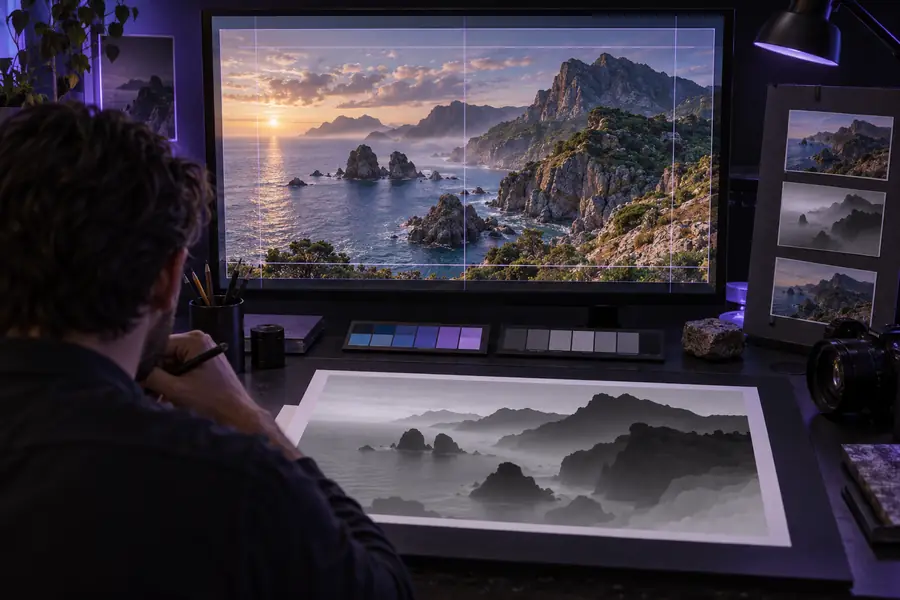
A visual check beats a feature checklist

Use matched source material to compare depth placement, edge behavior, and comfort. The pair below is a visual reference point; your own footage should remain the final test.

  • 2D source
  • 3D result
2D source image prepared for a 3D conversion comparison
Converted 3D example used to inspect depth separation and edge quality

Three measures for a fair test

A useful benchmark keeps the comparison concrete. Record the same three measures for each tool and repeat them on more than one source.

1 Compare Owl3D and IW3 with the same source files and viewing setup.
2 tools
2 Review depth structure, edge behavior, and comfort before judging quality.
3 checks
3 Run one representative project end to end before changing your main workflow.
1 pilot

Comparison FAQ

These answers focus on the practical questions behind an Owl3D and IW3 comparison.

There is no reliable universal winner without testing the same source files in both workflows. Owl3D may suit a direct 2D-to-3D process, while IW3 may be preferable when its controls or existing production process fit your material better.

No. Quality depends on the source, motion, occlusion, fine detail, and the amount of correction required after conversion. Compare matched samples and inspect difficult frames instead of relying on a single preview.

Conversion speed alone does not answer that question. Include import, setup, processing, review, correction, export, and delivery checks, then compare the total time to an acceptable result.

Switch when a representative pilot shows a meaningful improvement in your own workflow, such as fewer corrections, easier review, or better delivery compatibility. If the only difference is a short demo result, keep testing before migrating a larger library.

Use the same images and video in both tools, including clean scenes and difficult material with motion, hair, foliage, reflections, and overlapping subjects. Record output quality, processing time, correction effort, comfort, and export compatibility.

Start creating
Start creating